Sign In
 Create an
Account
Create an
Account




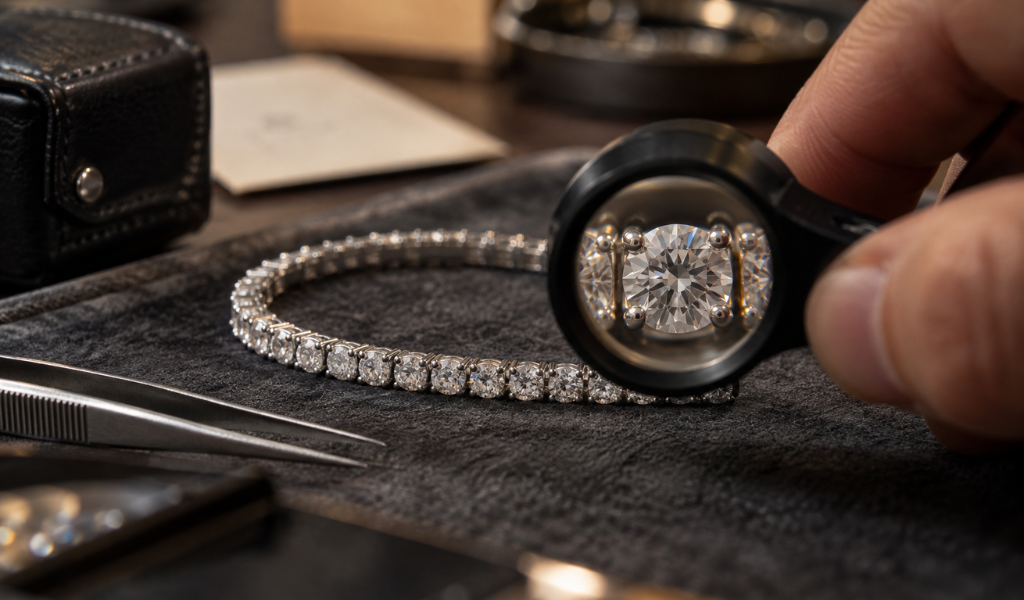

A bracelet can hold fifty stones or more, so there is nowhere for a weak one to hide. One cloudy or off-colour diamond shows up fast on the wrist. That is why anyone shopping for diamond Tennis Bracelets should know what to check before paying. Lab made diamonds are real diamonds, so quality comes down to grading, cutting and build. Here is what to look for.
Are Lab Made Diamonds Real Diamonds?
Yes. They have the same carbon structure, the same sparkle and the same hardness as mined stones. They score 10 on the Mohs scale, so daily wear is fine. The only real difference is where the diamond began. That means you should judge a lab made stone the same way you would judge a mined one, by its grade and its craft.
Read the 4Cs on Lab Grown Bracelets
Start with colour. D to F is the colourless range, and it gives the whitest look. Next is clarity. VS or better keeps stones clean to the eye, and VVS is cleaner still. Cut matters most for sparkle, because a poor cut looks dull even in a high grade stone.
Then check the carat weight. Total carat weight is the sum of every stone. A 5ct bracelet with 50 stones means about 0.10ct each. Always ask for a certificate or clear grading detail. At Divour Diamonds, our D/VVS lab grown line bracelets sit at the top end of the colour and clarity scale, and you can ask us about any piece.
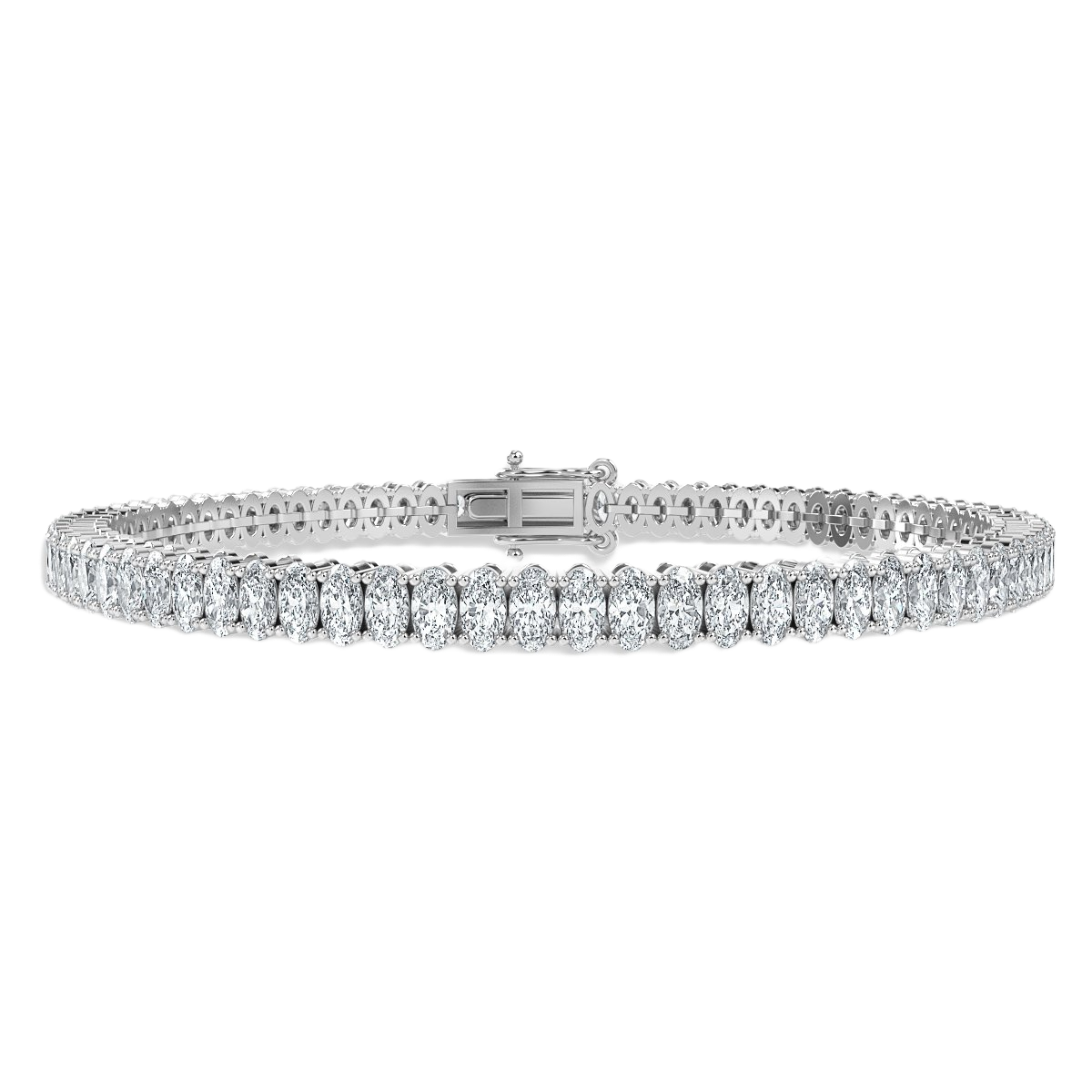
Round Cut or Emerald Cut Tennis Bracelets
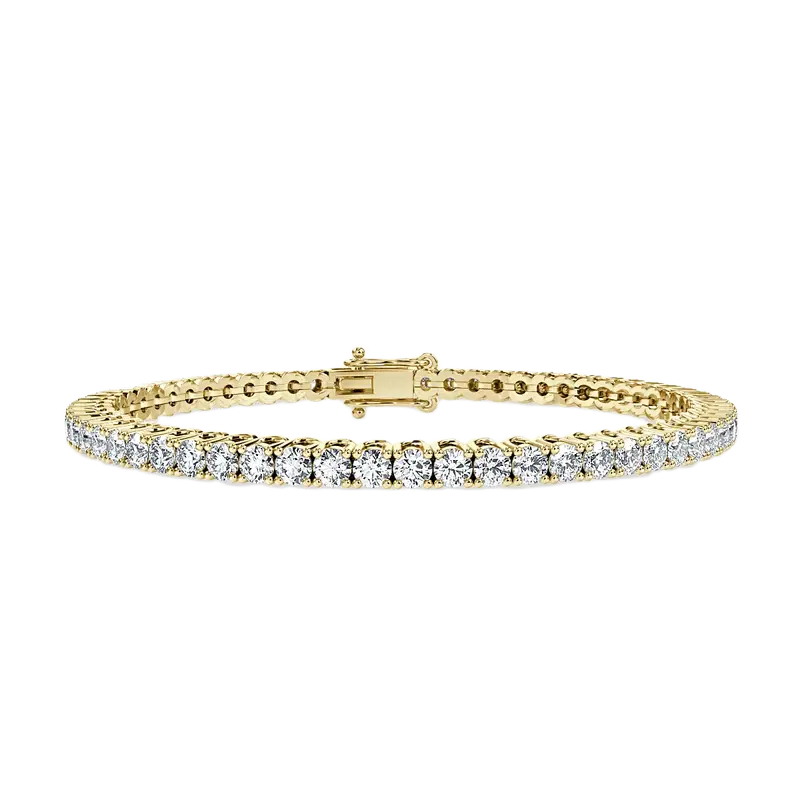
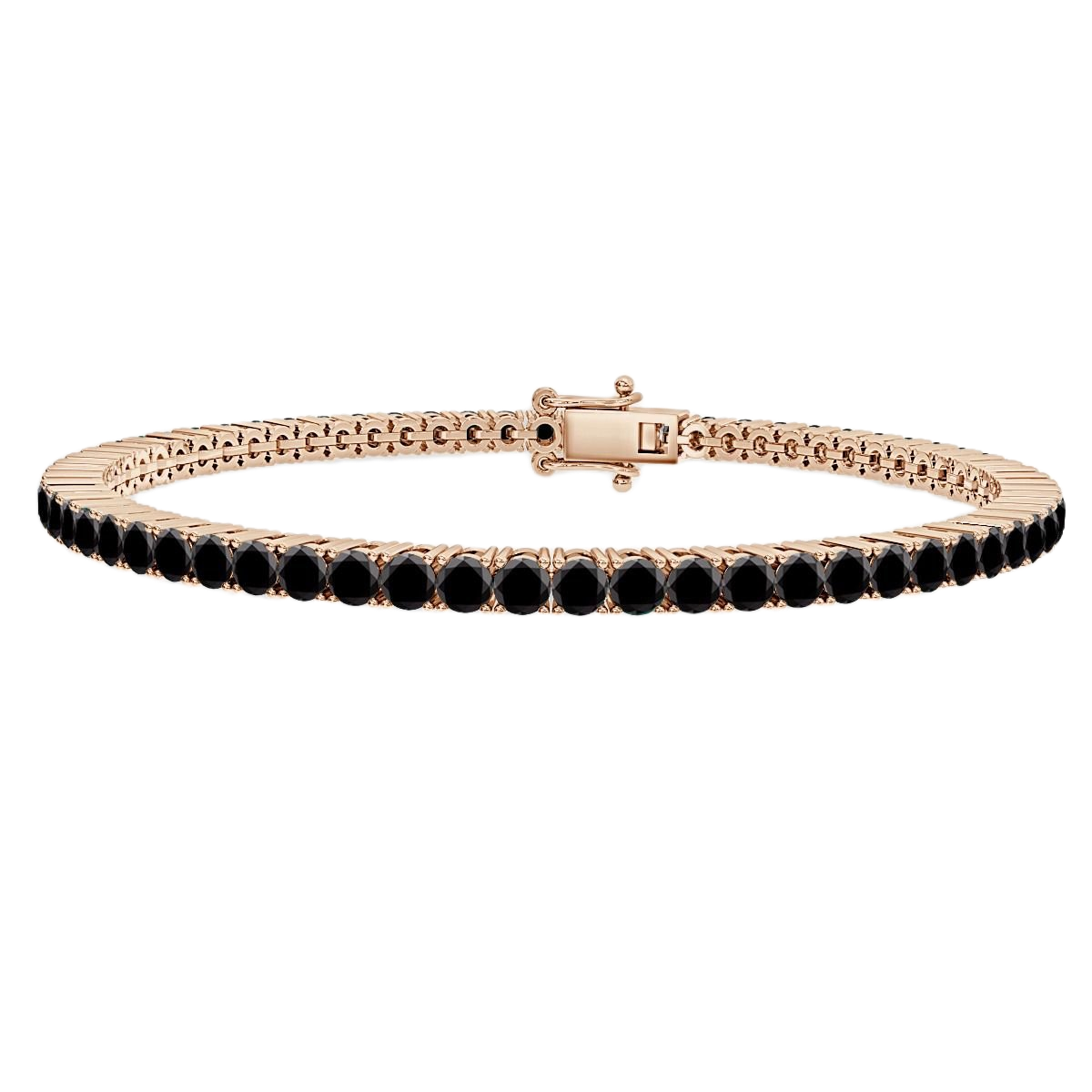
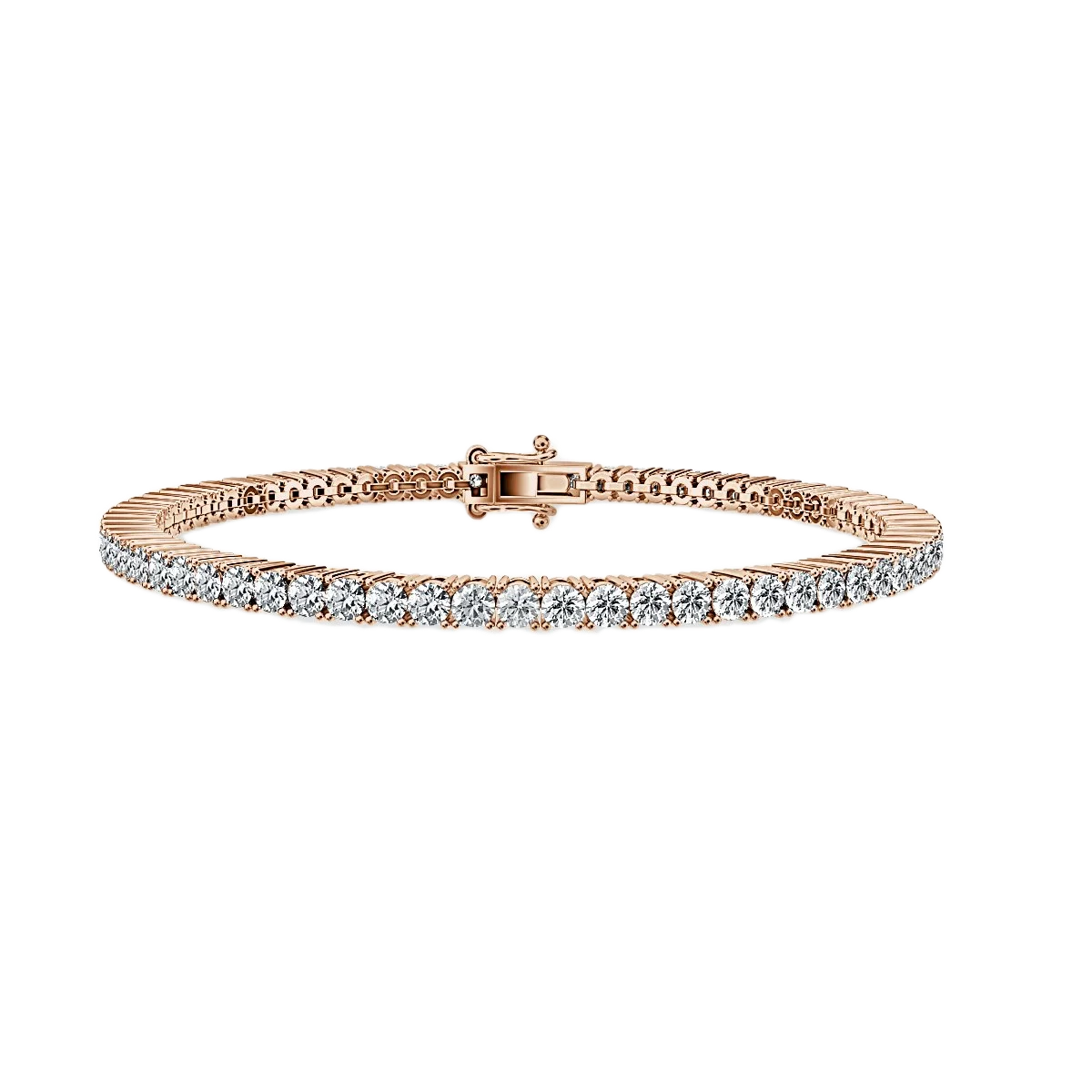
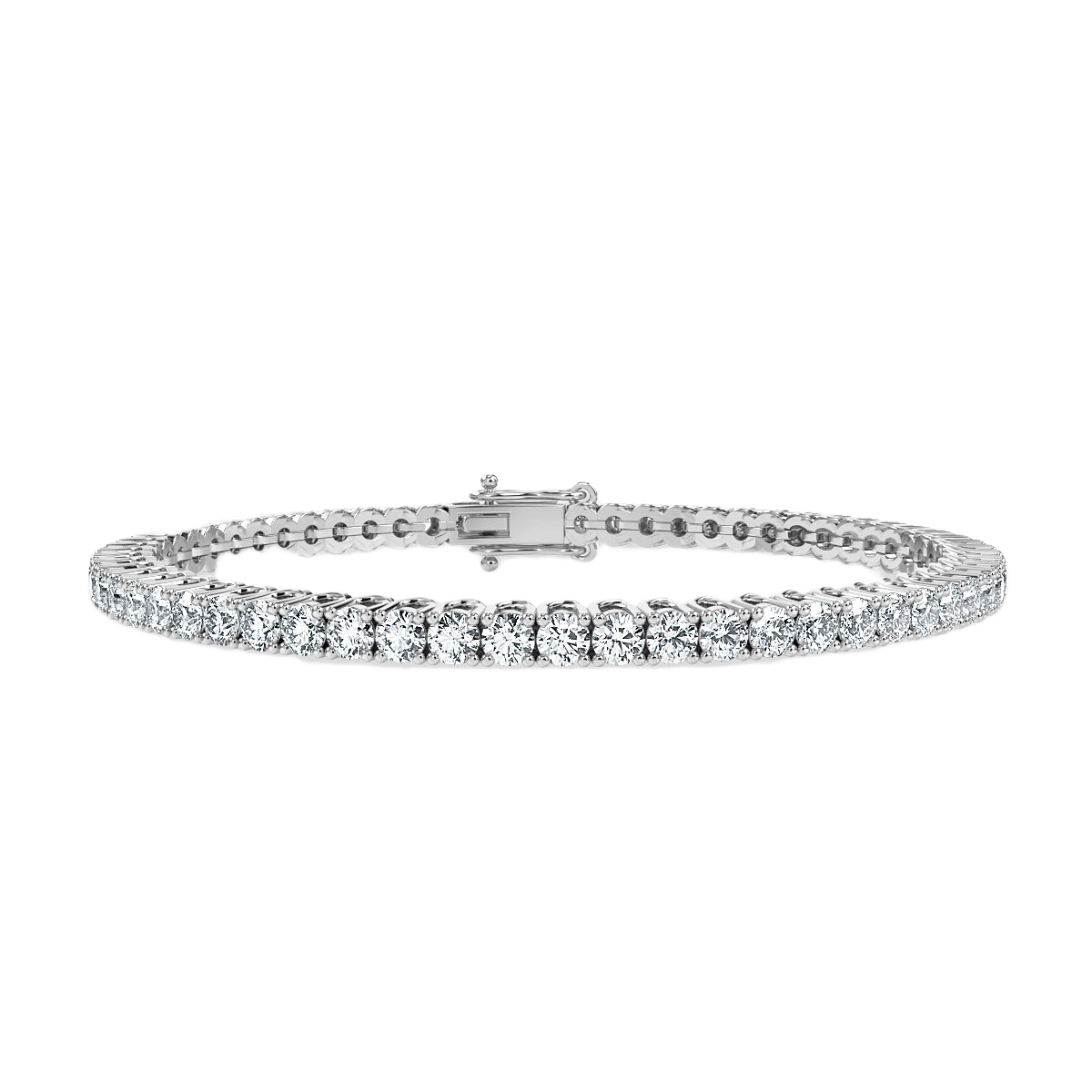
Round cut is the classic. It gives the most sparkle and hides tiny flaws well. If you want a bracelet that dazzles in any light, round is the safe choice. Our 6ct round cut bracelet in platinum is a good example.
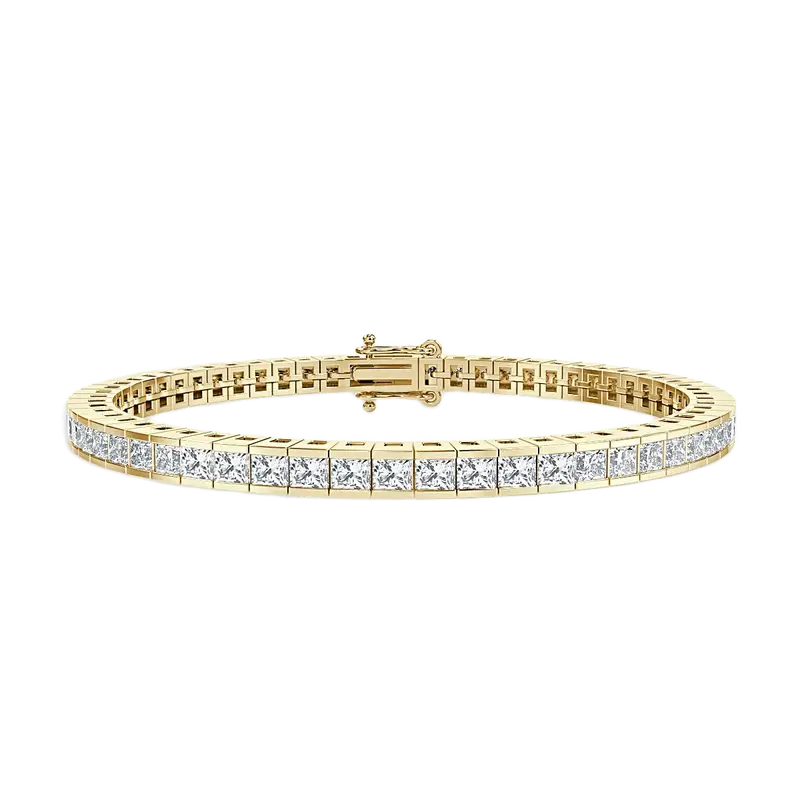
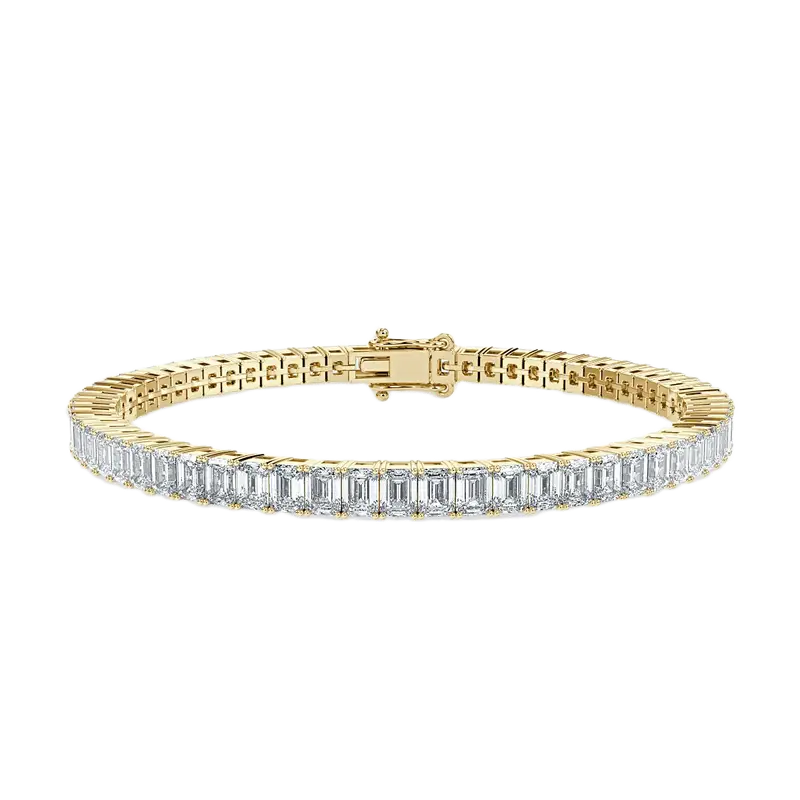
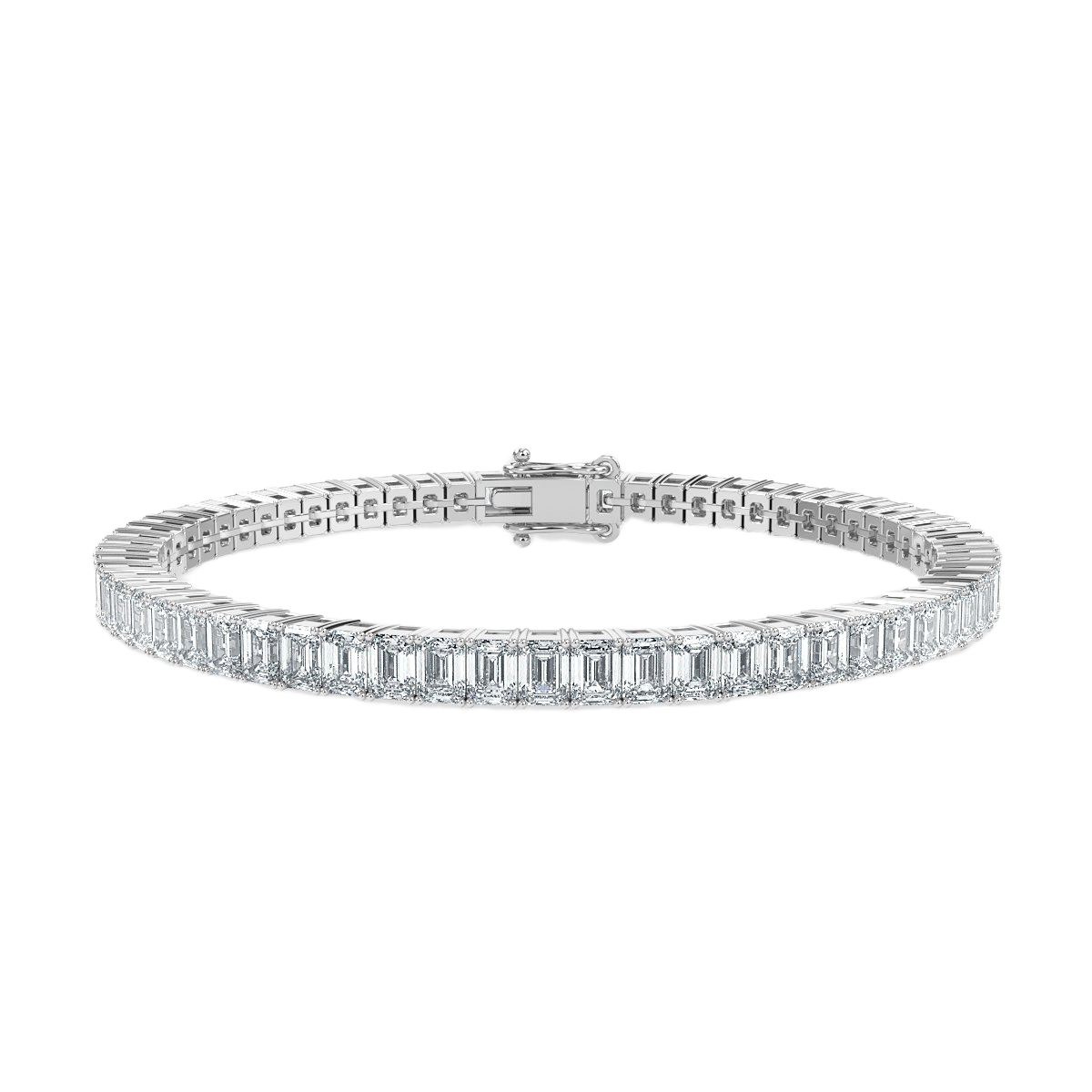
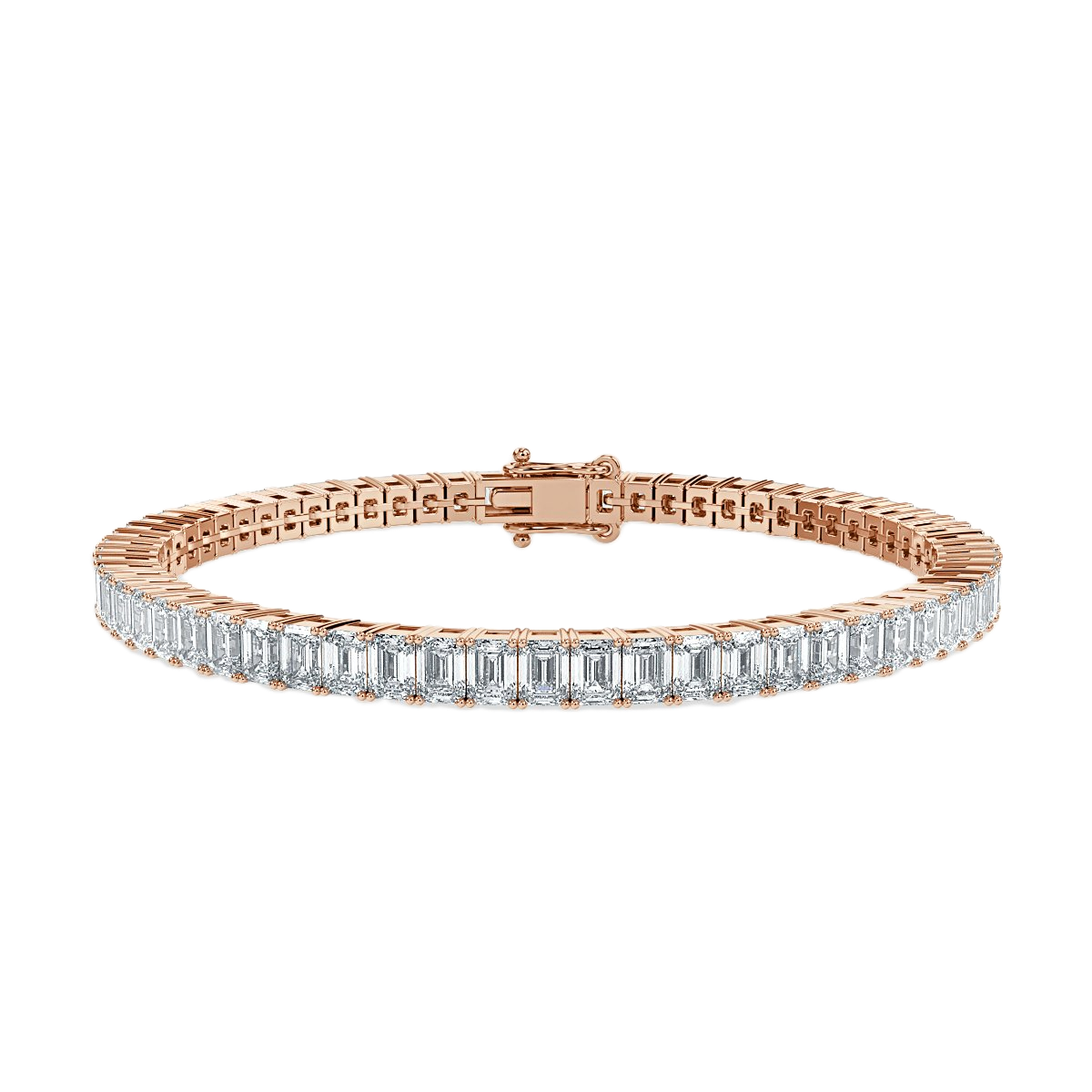
Emerald cut has a different feel. Long, clean steps of light give a glassy, modern look. It shows flaws more easily, so clarity matters more. Our emerald cut white gold bracelet uses D/VVS stones for this reason. Whichever you pick, the stones should look the same in size and shape from clasp to clasp.
Why Matching Stones Matter in a Line Bracelet?
A line bracelet only works when every stone looks like a twin. Hold it under bright light and scan the row. Look for odd colour tints, dull spots, or stones that sit higher than their neighbours. Lab made diamonds help here, because stones can be selected to match closely. A good eye still counts, though. If one stone looks different, ask why.
Check the Setting and Clasp of Your Tennis Bracelets
Prong settings let in the most light, so they sparkle more. Bezel settings wrap each stone in metal, which protects it better. Pick what suits your daily life.
Then test the build. The bracelet should flex smoothly and lie flat without twisting. Look for a box clasp with a safety catch, as this stops it slipping off. Check the metal too. Platinum and gold should carry a hallmark. Finally, measure your wrist. Seven inches is a common length, but a snug fit with a little room is best.
Price Red Flags to Watch For
Lab grown pieces cost less than mined ones, so a lower price is normal. A price that is far too low is not. Be careful if a seller gives no certificate, no colour and clarity grade, or no metal purity. Vague listings often hide weak stones. A good seller will answer every question clearly.
Care Tips to Keep Your Bracelet Sparkling
Good quality lasts longer with simple care. Clean your bracelet in warm, soapy water with a soft brush. Dry it with a lint free cloth. Check the clasp and settings every few months. Store it flat in a soft pouch, away from other jewellery.
Quick Checklist Before You Buy
- A certificate or clear grading detail
- Colour D to F and clarity VS or better
- Stones matched in size, shape and tint
- A secure setting and a box clasp with a safety catch
- Hallmarked metal
- A clear returns policy
Final Thoughts
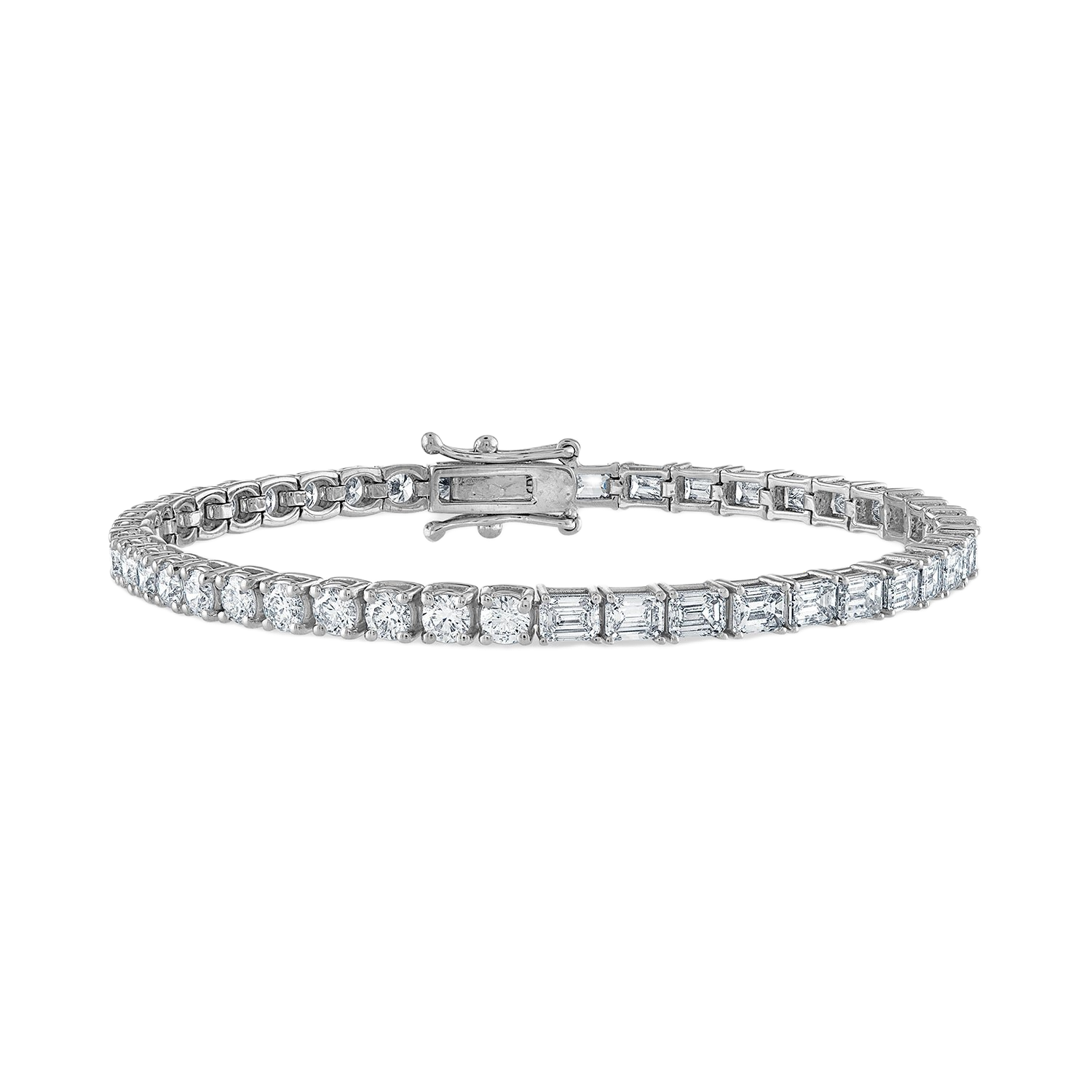
Good quality is easy to spot once you know the signs. Check the grade, the cut, the match and the clasp, and you will choose with confidence. When you are ready to look, browse our Tennis Bracelets collection and compare round cut and emerald cut styles side by side.