


 Sign In
 Create an
Account
Create an
Account




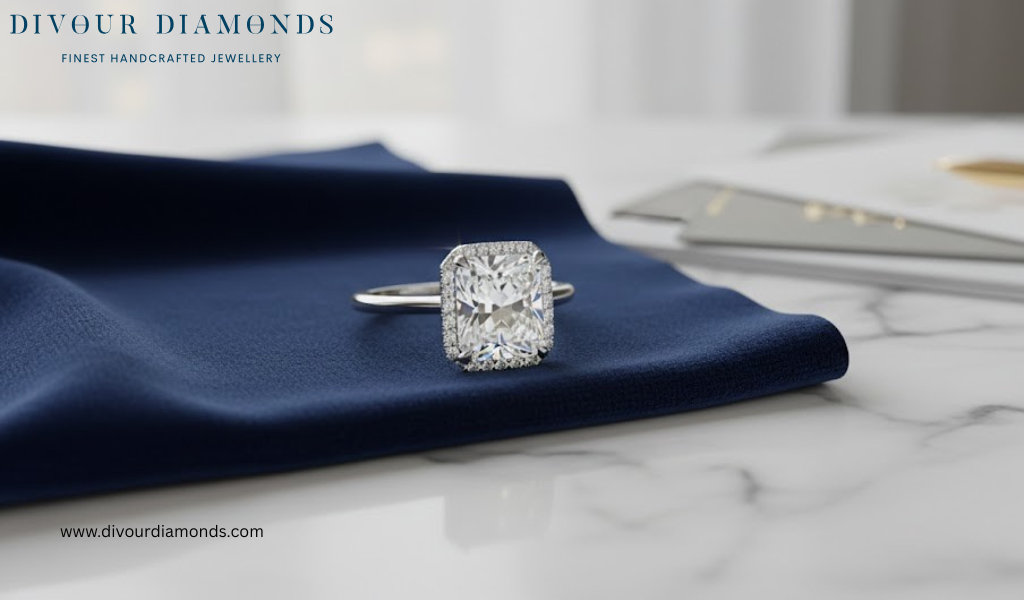

The reality is that these aren’t "pretend" diamonds. They are chemically the same as real diamonds. The only real difference is that they’re made in a lab in a matter of weeks rather than taking billions of years underground. For many of us, the idea of getting a bigger, brighter stone for a fraction of the price is an obvious pick.
What Makes Lab Grown Diamond Engagement Rings Special?
The biggest draw for lab grown diamond engagement rings is obviously the value. In 2026, you can expect to pay about 70% less for a lab-grown diamond compared to a mined one.
Think about what that actually means for your ring. Instead of settling for a 1-carat stone because of the price tag, you could potentially walk away with a 2-carat diamond that has even better clarity. It’s a massive win. Choosing a ring that’s conflict-free and better for the environment just adds an extra layer of meaning to the moment.
Lab Grown vs Lab Created Diamond Rings: What's the Difference?
The Meaning of the Terms
Diamonds that are created in a lab rather than through the process of mining are referred to as the “lab grown” or “lab created diamonds”. Both of these are genuine and have been produced with the help of cutting-edge technology.
Why the Terminology Differs
The term “lab created” is more formal and usually used in scientific or gemology settings. In jewellery, most brands now prefer “lab grown” because it sounds clearer and avoids confusion about the diamond being fake or an imitation.
Composition and Authenticity
Both lab grown and lab created diamonds have the same chemical, physical, and optical properties as natural diamonds. They are not simulants or substitutes, they are genuine diamonds that meet the same grading standards.
Appearance and Sparkle
When we talk about their appearance, there is no difference between lab grown and lab created diamond rings. Whether it’s the cut, clarity, brilliance or the designs, everything is identical.
Durability and Everyday Wear
Lab grown and lab created diamonds rank the same on the Mohs hardness scale as mined diamonds. This makes them equally durable and suitable for daily wear, including engagement rings and eternity bands.
Industry Preference Today
Most modern jewellers now use the term “lab grown” because it feels more transparent and aligns better with how customers understand the product. The shift is about language, not quality.
What It Means for Buyers
When choosing between lab grown and lab created diamond rings, you’re not choosing between two different diamonds. You’re simply seeing two names for the same thing- the real decision lies in design, setting, and personal style.
Quick Tips for Choosing Your Ring
Since your budget goes further, you have a bit more room to be picky. Here is how to make sure you get a stunner:
Prioritise the Cut Grade: This is the most important tip. The "Cut" is what determines the sparkle. Even if you buy a huge 3-carat stone, it will look dull and "glassy" if the cut isn't Excellent or Ideal. Always put your money into the cut quality first.
The "Eye-Clean" Sweet Spot: You don't need a "Flawless" (FL) diamond to have a perfect-looking ring. For the best value, look for VS1 or VS2 clarity. These stones have tiny inclusions that are invisible to the naked eye, saving you thousands while looking identical to a flawless stone.
Colour Balance: If you are setting your diamond in yellow or rose gold, you can safely drop to a "G" or "H" colour grade. The warmth of the metal hides the slight tint of the diamond, allowing you to spend that extra money on a larger carat size.
Always check the IGI or CIA Certification: Just make sure that you are purchasing a lab grown diamond engagement ring with a certificate from a prominent lab.
Conclusion
At the end of the day, picking an engagement ring is a huge moment. Lab Grown Diamond Engagement Rings just give you a way to make that moment a bit more spectacular without the massive financial hangover. You get a beautiful, ethical stone that will last a lifetime, and let’s be honest, no one is going to know the difference unless you tell them.
If you want more tips on how to pick the perfect stone, why not subscribe to our blog? We’re always sharing the latest trends and "behind-the-scenes" advice on all things jewellery.